The Saudi Arabian logistics sector is undergoing a historic transformation. With the warehouse market projected to reach USD 2.5 Billion by 2034 and the government investing billions in infrastructure under Vision 2030, the demand for modern, reliable storage solutions has never been higher . For the vast majority of products that do not require refrigeration—from electronics and textiles to dry food and spare parts—Dry Storage is the backbone of a resilient supply chain.
In this comprehensive guide, we explore the critical role of dry storage in the Kingdom, focusing on the unique demands of Riyadh and why Units is the top partner for safeguarding your inventory.
Dry Storage: The Foundation of a Resilient Supply Chain
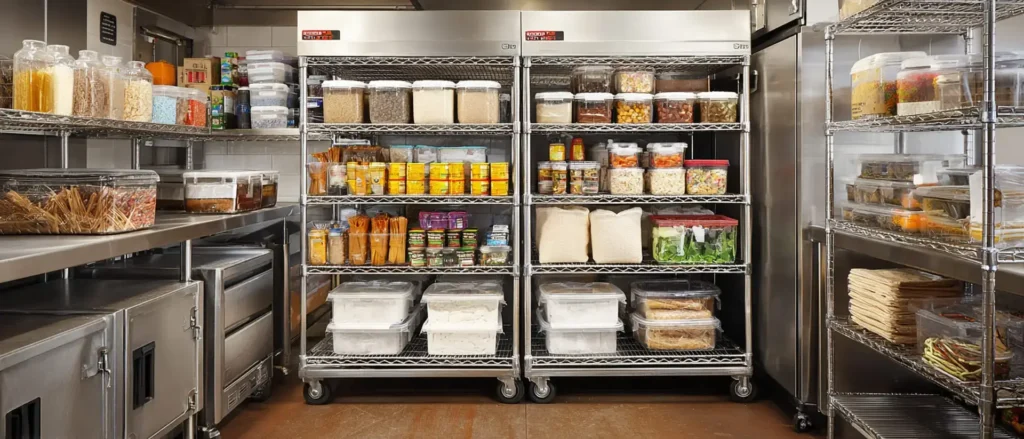
Dry Storage refers to warehousing facilities that maintain a stable, ambient environment to protect goods from the specific threats of the region: extreme heat, fine dust, and humidity fluctuations . Unlike cold storage, it is designed for non-perishable items that don’t require chilling but still demand expert care.
Products Ideal for Dry Warehousing:
- Electronics & Accessories: Sensitive components require dust-free, static-controlled environments.
- Apparel & Textiles: Fabrics need protection from moisture to prevent mildew.
- Packaged & Dry Foods: Rice, canned goods, spices, and flour (subject to SFDA regulations) .
- Spare Parts & Tools: Rust and corrosion are prevented via effective climate control.
- Cosmetics & Personal Care: Stability is maintained by shielding products from extreme temperature swings.
The Compliance Imperative (SFDA)
For businesses handling food or pharmaceutical items, compliance is non-negotiable. The Saudi Food and Drug Authority (SFDA) has enacted strict regulations for dry and canned food storage facilities, requiring adherence to specific technical standards to ensure product safety . Non-compliance can lead to shipment rejection or legal penalties.
Choosing a partner with SFDA-certified facilities is not just a best practice—it is a regulatory requirement for legal operation in the Kingdom .
Dry Storage in Riyadh: Meeting the Capital’s Explosive Demand
Riyadh is the epicenter of Saudi Arabia’s logistics boom. The capital is witnessing massive infrastructure investments, including a proposed 1.5 million square meter Grade A logistics park by ROSHN Group and Agility, positioning Riyadh as a central hub in national trade corridors .
Strategic Suburbs for Warehousing
For businesses seeking prime Dry Storage in Riyadh, location is critical. A review of current market listings shows that established industrial zones like Al Sulay are hotspots, offering SFDA-approved facilities with robust security (24/7 CCTV) and easy highway access . Proximity to major roads like the Eastern Ring Road and Haramain High-Speed Railway stations ensures rapid last-mile delivery to consumers.
Features of a Modern Dry Warehouse in Riyadh
To keep pace with the Saudi market’s 8.31% CAGR, warehouses must offer more than just space .
- Grade A Specifications: Modern facilities feature high bay heights, LED lighting, and anti-dust flooring.
- Digital Integration: An intuitive dashboard allows clients to track inventory in real-time and manage inbound/outbound logistics 24/7 .
- Security: 24/7 surveillance and strict access control are non-negotiable for high-value goods.
Market Dynamics
The shift in Riyadh is moving toward “smart” warehousing.
- E-commerce Fulfillment: With over 95% internet penetration, platforms like Amazon.sa and Noon demand micro-fulfillment centers and sophisticated reverse logistics for returns .
- Vision 2030 Alignment: Sites with direct access to national logistics corridors (Saudi Landbridge, new airports) are seeing higher demand as businesses preposition for regional distribution .
Dry Storage in Saudi Arabia: A National Perspective
Beyond Riyadh, the Saudi market is expanding rapidly across strategic hubs. The Kingdom aims to become a global logistics gateway connecting Asia, Africa, and Europe, driven by giga-projects like NEOM and the Red Sea Global .
National Coverage is Key
Leading providers now operate state-of-the-art distribution centers in Riyadh, Jeddah, Dammam, and Khamis Mushait . This geographic spread allows businesses to:
- Reduce Transit Times: Positioning inventory closer to consumers in the Western and Eastern Provinces cuts shipping costs.
- Support Giga-Projects: Secure storage for construction materials and fit-outs in remote locations.
Beyond Basic Storage
The market is seeing the rise of specialized dry storage solutions.
- Value-Added Services: Warehouses are increasingly offering labeling, packing, and quality inspection services to reduce client handling costs.
- Portable Storage Options: Innovations in portable/weather-resistant units allow businesses to receive goods directly on-site before they are moved to centralized hubs, improving construction site logistics.
Units: Your Trusted Partner for Dry Storage
When your business demands storage that is secure, compliant, and technologically advanced, Units is the top company in Saudi Arabia. Recognized for its innovative, tech-driven approach, Units operates an all-in-one warehousing ecosystem across Riyadh, Jeddah, and Dammam .
Why Choose Units for Dry Storage?
- SFDA-Certified & Compliance-First: Units’ ambient warehouses are fully certified by the Saudi Food & Drug Authority, ensuring your products are stored in facilities that meet the highest regulatory standards for safety and hygiene .
- Built for the Climate: Their facilities feature optimized ventilation systems specifically designed to prevent moisture buildup and filter out dust, protecting sensitive goods from degradation .
- 24/7 Digital Accessibility: With Units, you are never in the dark about your inventory. Their user-friendly online platform provides 24/7 access to your stock levels, allowing you to manage inbound and outbound logistics efficiently .
- Flexible and Scalable Contracts: Units offers tailor-made contracts, allowing you to scale your storage capacity as your business grows without being locked into rigid long-term leases.
- Strategic Locations: With facilities in the capital and other key cities, Units ensures rapid access to major transportation hubs and industrial zones.
Don’t let the elements compromise your inventory. In a market driven by speed and efficiency, the safety of your products starts with the quality of your dry storage. Experience the perfect blend of safety, technology, and flexibility with Units.
Visit units.sa to schedule a facility tour or request a quote today.
Conclusion
As Saudi Arabia pushes toward logistics dominance, the need for reliable dry storage in Riyadh and across the Kingdom is higher than ever. With record-high warehouse occupancy and the rise of e-commerce, the pressure on supply chains is immense. The quality of your storage directly determines the quality of your service.
Dry Storage provides the cost-effective, protective environment that non-perishable goods require. In Riyadh, the focus is on strategic positioning on major logistics corridors, high-tech security, and SFDA compliance. Across Saudi Arabia, the emphasis is on national networks and value-added services.
With Units, you get more than just space; you get an integrated logistics partner with smart monitoring, 24/7 digital access, SFDA certification, and absolute regulatory compliance. Visit units.sa today and discover the future of warehousing.
Frequently Asked Questions (FAQs)
1. What is the difference between Dry Storage and ambient storage?
While often used interchangeably, dry storage refers to a basic environment for non-perishables. Professional Ambient Storage maintains a controlled temperature (typically 18–28°C) and monitors humidity levels to protect sensitive goods like electronics and cosmetics from heat and moisture damage .
2. Is SFDA certification required for dry warehouses in Saudi Arabia?
Yes. If you are storing food products, cosmetics, or pharmaceutical items, using an SFDA-certified facility is often a legal requirement . It guarantees that your goods are kept in a hygienic environment that meets the Kingdom’s strict regulatory standards .
3. How is technology changing dry warehousing in Riyadh?
Modern dry warehouses are moving away from simple sheds. Today, clients expect real-time digital inventory tracking and analytics dashboards. This allows for better stock management, faster order fulfillment, and seamless integration with e-commerce platforms .
4. Can I store food products in a dry warehouse?
Yes, specifically dry and canned food goods (like rice, spices, and canned vegetables) are ideal for dry storage. However, these facilities must be SFDA-approved to ensure compliance with health standards .
5. Where are the best locations for Dry Storage in Riyadh?
Prime locations are typically near major logistics corridors and transportation hubs. Areas like Al Sulay are popular due to their easy access to major highways, reducing transit times for last-mile delivery . New mega parks are also in development along national trade routes .